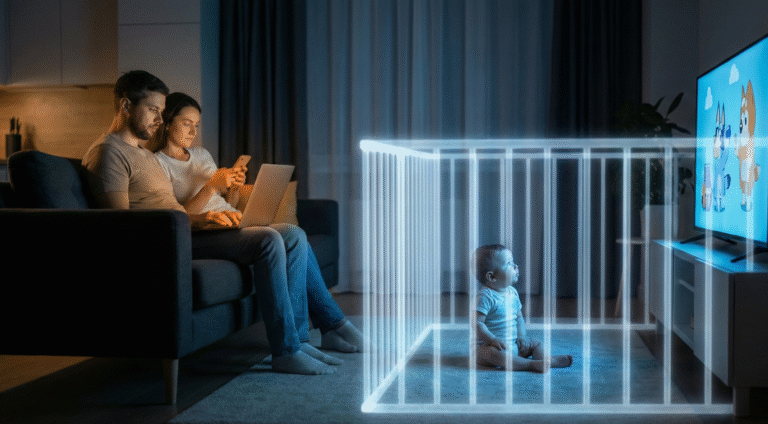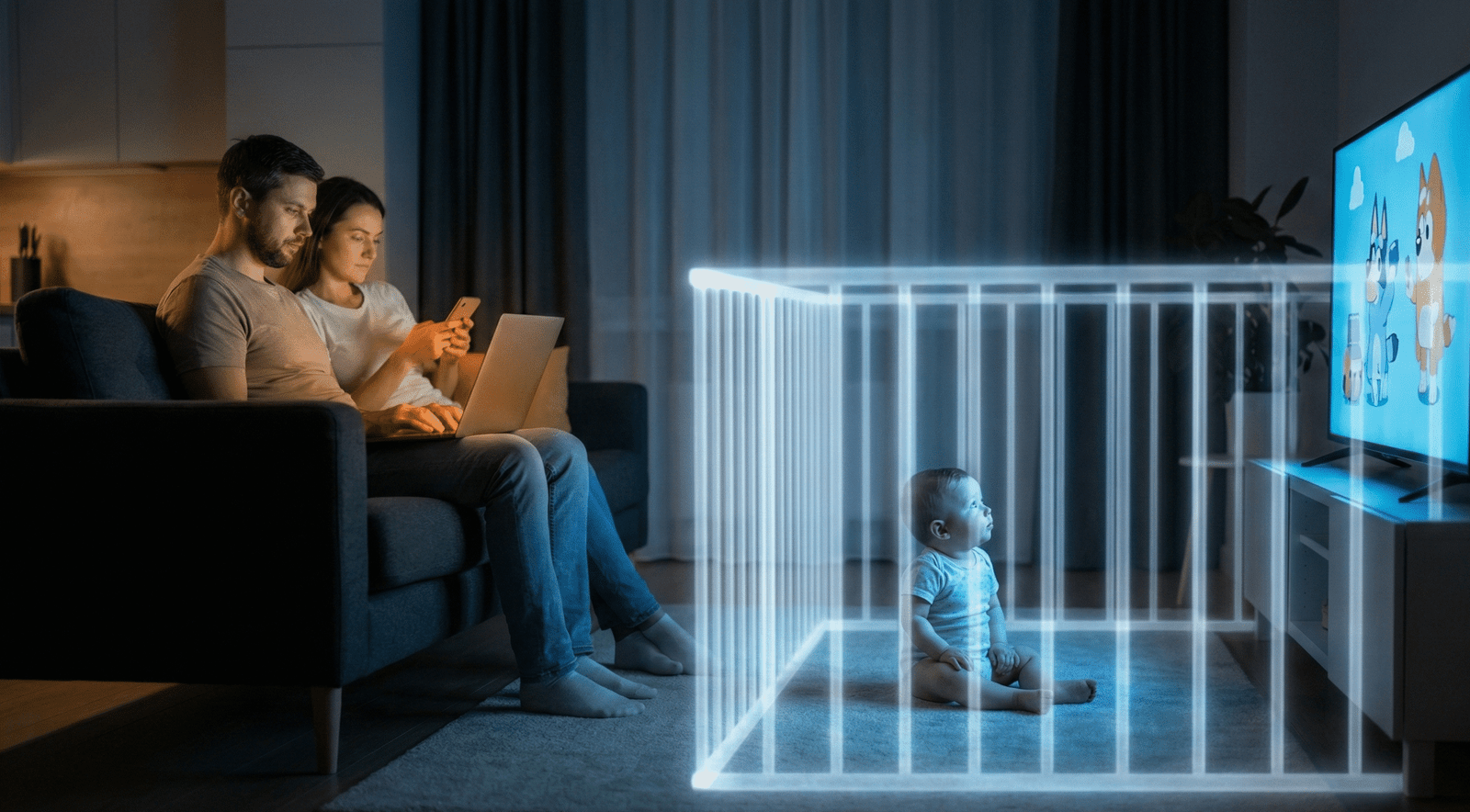
You already know TV isn’t great for babies. But you’re still typing Is Watching TV Good For Babies? inside Google. Still wondering. Still hoping for clarity. That means you care in the deepest way. It shows you want the truth. It shows you want to understand what is really happening in your baby’s brain.
So let’s walk through this together.
Here’s the truth in the softest words. Babies learn from your voice, your touch, your smile. Not from fast flashing screens. Real play builds their brain. Real love shapes their world.
A little screen with you beside them is okay sometimes. But nothing replaces you.
Your presence is the real magic.
“We know you are parents and you already know that watching TV is bad for your kids and still you are searching for this. It means you are pretty serious about going in depth of this topic.
If you’re looking for tools that support healthy, screen-free learning, you can explore this: learning and educational toys.”These options keep your baby engaged without relying on screens.
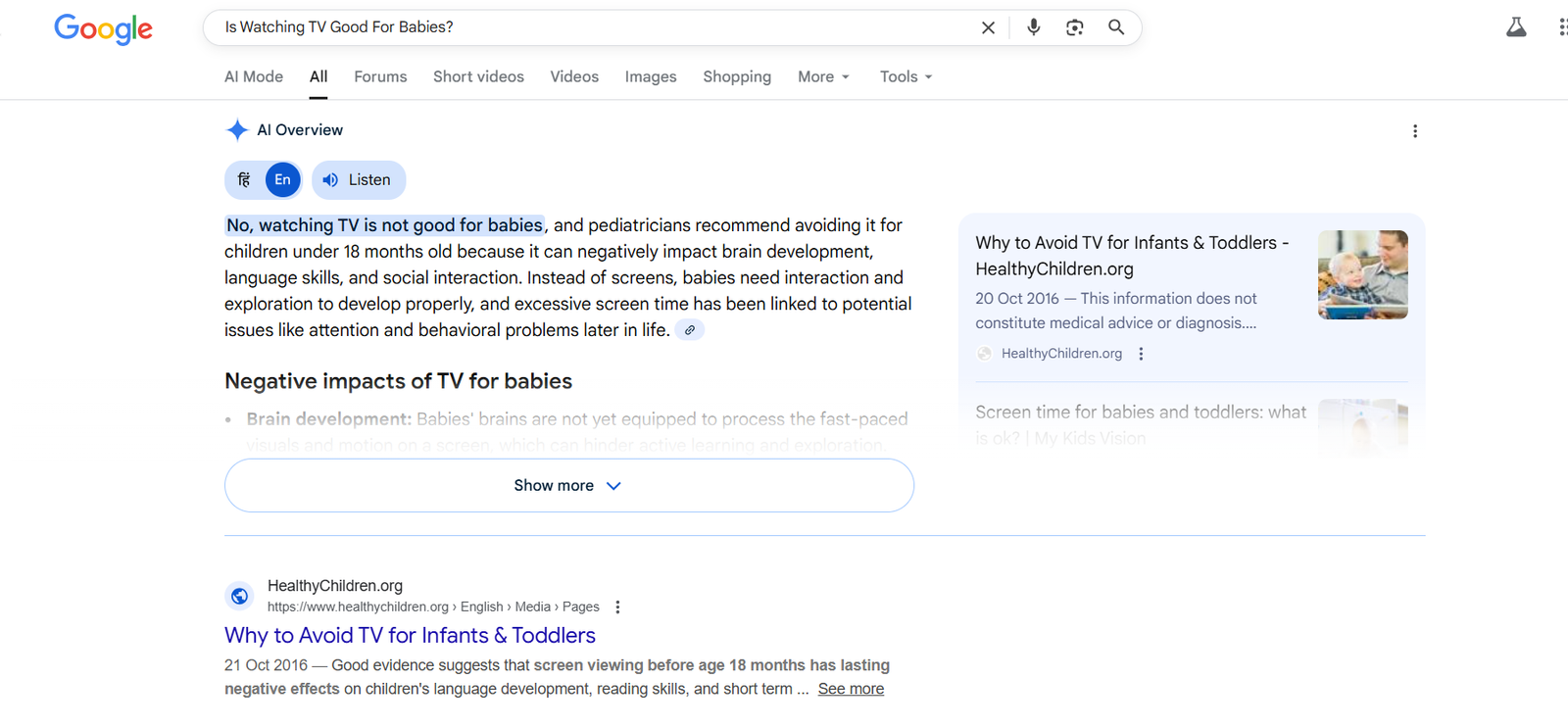
What Google Usually Shows When You Search This
Let me ask you something
These quick questions will help you think deeper.
- Have you noticed your baby staring at the TV like they are frozen?
- Do you turn on cartoons so you can finish chores?
- Do you worry that TV might affect speech or attention later?
- Do you hope that a little bit of “educational” content might be helpful?
- Do you feel confused by mixed advice online?
If you said yes to even one of these, you are not alone. Parents everywhere feel the same.
What Famous Studies Say about whether Watching TV is Good or Bad For Babies?
I’ll keep it simple and clear.
1. JAMA Pediatrics Study
- Babies who had more screen time at age 1 showed delays in
- Language
- Problem solving
- Social skills
- Motor skills
By ages 2 to 4 these delays became stronger and more visible.
Researchers warned that early screen habits can shape a child’s learning path for years.
You can read the study here:JAMA Pediatrics research on early screen time and developmental delays↗
2. Harvard Child Development Study
Heavy screen use changed brain activity linked to
- Attention
- Self-control
- Decision making
EEG scans showed “fast but chaotic” brainwaves in babies with more screen exposure.
Full breakdown here: Harvard and Boston Children’s Hospital findings on infant brain activity.↗
3. Boston Children’s Hospital Research
Screens under age 2 were linked with “sensory overload.” Babies became
- Less responsive
- More restless
- More dependent on strong stimulation
Experts found babies struggled to stay calm without bright, fast-moving images.
Detailed explanation here: Boston Children’s Hospital sensory study on screens.
4. Children and Screens Institute — Early Development and Media Use
Screens created “passive learning.” Real learning comes from
- Touch
- Movement
- Eye contact
- Human voice
- Real objects
Their experts explain that babies learn fastest through real-life sensory experiences.
Full guide here: Children and Screens Institute research on early development.
Let’s Make This More Visual
So you can picture it clearly.
Baby’s Brain With Real Play

- Colors from toys
- Sounds from your voice
- Warm touch
- Eye contact
- Natural curiosity
- Slow, steady learning
Baby’s Brain With TV
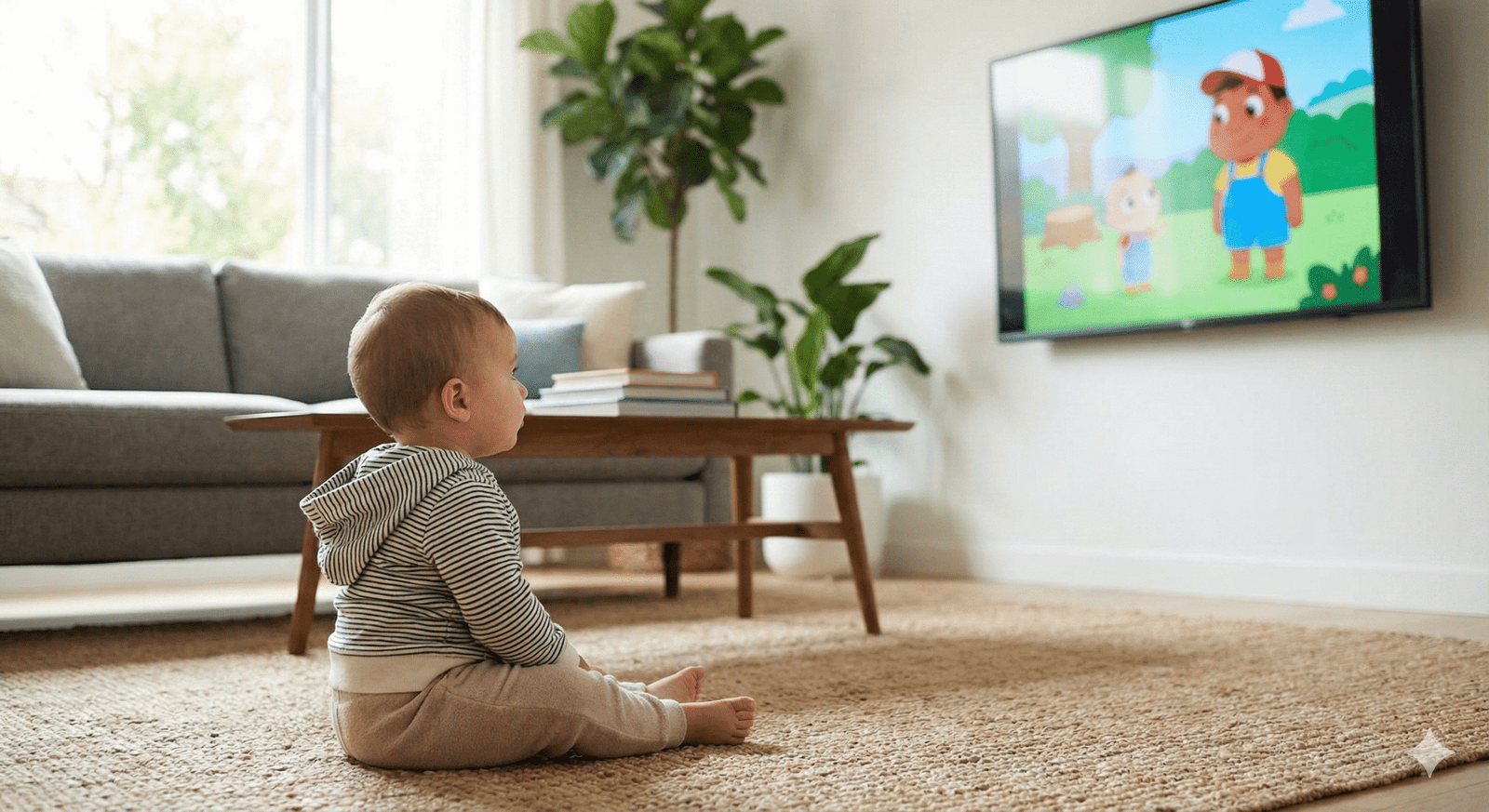
- Fast flashing images
- Loud artificial sounds
- No real connection
- Confusion
- Stress
- Overstimulation
One fills the heart where as Other fills the senses.
Babies need the first one more.
So Is TV Ever “Good” for Babies?
Let’s make this crystal clear.
If your baby is under 18 months
TV does not help their development.
It does not teach them words.
It does not make them smarter.
It can even slow speech and affect attention.
Babies learn best through:
- Your face
- Your voice
- Real touch
- Real objects
- Real play
- Simple moments with you
Screens cannot give them that.
If your child is 18 months or older
You can use a little screen time, but in a very gentle way.
Keep it simple:
- Watch together
- Choose slow, calm content
- Keep it short
- Don’t make it a daily routine
- Never use screens to replace your presence or comfort
Screens for toddlers should be a tiny part of life, not a teacher and not a babysitter.
A Quick Parent Checklist

Use this when you feel unsure.
- Is my baby under 18 months?
- Is the screen replacing my presence?
- Am I using TV because I feel tired or stressed?
- Is this a habit or a special moment?
- Can I replace this with music or play instead?
What Truly Matters in the End
You’re reading this because you want clarity. You want to understand what truly helps your baby grow. And that already shows how much intention you bring to your parenting.
Some days feel light. Some days feel heavy. You still show up. You still try. You still care. And your baby feels that more than anything — your steady presence.
Screens will always be around. Life will get busy. But the moments your baby remembers are the quiet, simple ones. Your voice when you talk to them. Your smile when they look up. Your arms when they need comfort. Your attention when they’re discovering the world.
Those small moments do the real shaping. They build trust, confidence, and connection in ways a screen never can.
And that’s what truly matters in the end.